
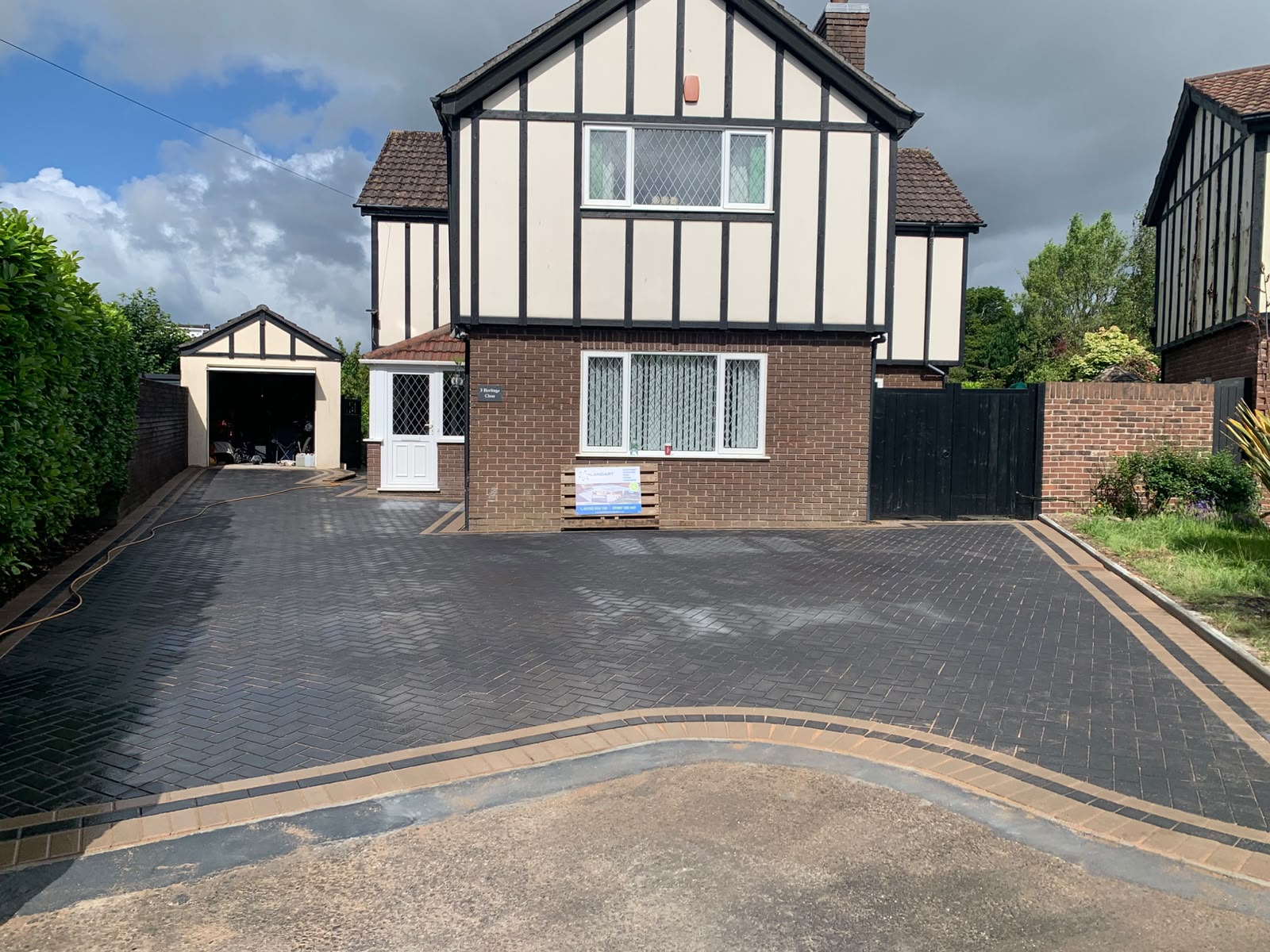
5 Signs Your Plymouth Driveway Needs Replacing — And What to Do Next
Most driveways in Plymouth do not fail dramatically. They decline gradually, one small problem at a time, until those problems compound into something that is expensive to ignore. Knowing the early warning signs means you can act before the damage reaches the sub-base, which is when a simple resurfacing job turns into a full excavation and significantly higher costs.
Here are the five signs we most commonly see across Plymouth driveways, what each one tells you about the condition of the surface beneath, and what your options are.
1. Cracks Appearing Across the Surface
Surface cracking is the most visible sign that something is wrong, but what matters is the type and pattern of the cracking rather than its presence alone.
Hairline cracks in tarmac or concrete are common and often cosmetic — the result of UV exposure and natural thermal expansion over years of use. These can usually be filled and sealed if the sub-base beneath is sound.
Wider cracks, particularly those that run in irregular or spiderweb patterns, usually indicate sub-base movement beneath the surface. In Plymouth, this is most commonly caused by clay shrinkage during dry summers, water ingress freezing in the sub-base during winter, or tree root activity from nearby mature trees. If cracking runs deeper or is accompanied by surface movement when walked on, the sub-base has likely failed and a full replacement will be necessary.
Block paving rarely cracks because the individual blocks flex slightly rather than fracturing. However, if blocks are rocking or whole sections are moving, the sub-base beneath has shifted and the same principle applies.
What to do
Call for a free survey. The most important thing to establish is whether the sub-base beneath is sound. If it is, a resurfacing or repair may be appropriate. If it has failed, a replacement is the right long-term investment. We will give you an honest assessment of both options and their relative costs.
2. Sinking or Uneven Surfaces
Sinking in a driveway — areas that are noticeably lower than the surrounding surface — is almost always a sub-base problem. Water infiltrates through cracks or joints, softens the base material, and the surface above loses its support and drops.
In Plymouth, clay-heavy soils in areas like Plymstock, Plympton and parts of the older city are particularly prone to this. Clay expands when wet and contracts when dry, and repeated cycles over years of Devon weather gradually displace the sub-base material. Once sinking starts, it accelerates: the depression collects water, which causes further softening, which causes further sinking.
A sunken area also creates a drainage problem. Water that should run off the driveway now sits in the low point, increasing the risk of sub-base saturation, frost damage in winter, and — where the driveway is adjacent to the house — potential damp issues against the building.
What to do
Small localised sinking in block paving can sometimes be addressed by lifting the affected blocks, reinstating the sub-base beneath, and relaying. This is one of the specific advantages of block paving over other surfaces. On tarmac or resin bound, sinking almost always requires more significant intervention. A site survey will determine the extent of the problem and the most appropriate solution.
3. Drainage Problems and Standing Water
A driveway should shed water efficiently. If water is pooling on the surface after rainfall — particularly in the same spot every time — the driveway has a drainage problem that will worsen over time.
The cause might be a blocked or collapsed drainage channel, a failed soakaway, a sub-base that has become compacted and impermeable, or a surface that has lost its original fall due to settlement. In some Plymouth properties, particularly on older roads where drainage infrastructure is ageing, the problem is related to the highway drainage rather than the driveway itself.
Persistent standing water on a driveway in Plymouth is not just inconvenient. It accelerates surface deterioration, increases the risk of sub-base damage through water ingress, and — under current English planning rules — may place you in breach of permitted development drainage requirements if the runoff reaches the public highway.
What to do
A drainage survey as part of a free driveway survey will identify where the problem originates and what is needed to resolve it. The solution might be as simple as clearing a blocked channel drain, or might involve reinstating drainage as part of a wider replacement. We will confirm at the survey before you commit to anything.
4. Weed Growth Through Joints or the Surface
Weeds in driveway joints are a maintenance issue rather than a structural one, but persistent weed growth that is no longer responding to treatment can indicate that the jointing between blocks has deteriorated to the point of structural significance. When jointing sand washes out or degrades, blocks lose their lateral restraint, begin to rock, and the surface becomes unstable.
On tarmac driveways, weed growth through the surface usually indicates cracks large enough for roots to penetrate, which points to the same sub-base issues described above. Weeds growing through tarmac are not cosmetic — they are a diagnostic.
Resin bound driveways are largely weed-resistant by nature due to the absence of joints, which is one reason they have grown in popularity across Plymouth. If weeds are appearing in a resin bound surface, the surface itself has likely failed.
What to do
For block paving with weed issues, a professional clean, weed treatment, re-sanding and sealing will often resolve the problem if the sub-base is sound. If the blocks are rocking or the surface is uneven, the joint deterioration has progressed further and a more thorough assessment is needed. Call us on 01752 916155 for a free survey.
5. The Driveway Is Simply Old and Worn
Sometimes there is no dramatic problem — the driveway has just reached the end of its useful life. Faded, stained, worn tarmac that no longer cleans up well. Block paving where the colour has bleached out, the texture has worn smooth, and the overall appearance has become tired. An old concrete driveway with surface scaling and years of oil and fuel staining that sealing will not address.
A worn driveway affects the first impression your property makes, and in Plymouth’s competitive property market, kerb appeal matters. A new driveway is one of the most visible and immediately effective investments you can make in a property’s appearance.
If your driveway is approaching or past 20 to 25 years old and is showing its age, a replacement rather than a repair is usually the better investment. A fresh installation on a properly prepared sub-base will give you another 20 to 30 years of good performance and significantly improved appearance from day one.
What to do
Arrange a free survey. We will assess the condition of the existing surface, advise on whether any elements of the existing base can be retained, and quote for a full replacement with your choice of surface. We install block paving, resin bound, tarmac, gravel and concrete across Plymouth and Tavistock.
What to Do If You Recognise Any of These Signs
The most important thing is not to leave it too long. All five of the problems described above progress over time. A crack that needs a fill today becomes a sub-base failure that needs a full dig-out next year. A blocked drain that causes inconvenient pooling in winter causes structural damage by the following spring. Acting while the problem is still manageable almost always results in a lower cost and a less disruptive job.
We offer free, no-obligation site surveys across Plymouth and Tavistock. Miles and the team will come to your property, assess the driveway honestly, and give you a clear picture of what is going on and what your options are — without any pressure to proceed. For more context on driveway costs, read our Plymouth driveway cost guide.
Call us on 01752 916155 or 07484 183449, Monday to Sunday, 8am to 6pm. Or send us a message and we will call you back the same day.
Landart Drives & Patios Ltd · 103 Duke Street, Devonport, Plymouth PL1 4EE · Monday to Sunday, 8am to 6pm