
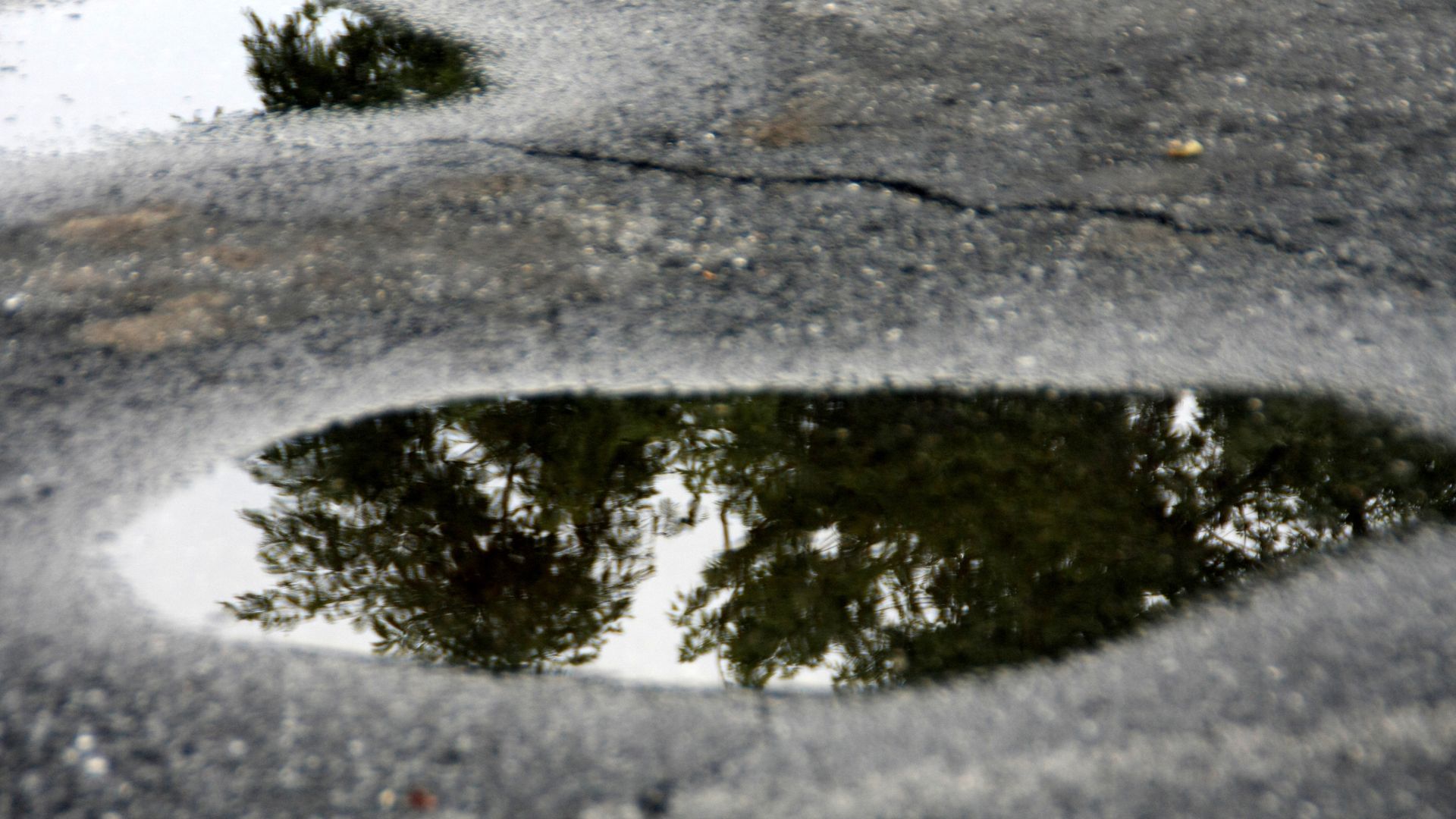
Water pooling on your driveway can point to a blocked drainage channel, a sunken area or a problem with how rainwater leaves the surface. Changing the finish alone may leave the cause untouched. For Plymouth homeowners, the useful first step is to identify where water collects, where it comes from and where it should go.
What causes water pooling on your driveway?
Puddles form where water collects faster than it can drain away. Leaves and silt can obstruct a channel, while a low spot can hold water even when the nearby drain is clear. In other cases, the driveway has insufficient fall, or the ground beneath a permeable surface cannot take the water away as intended.
Notice whether the puddle sits in a wheel track, beside an edging or across the whole drive. Water arriving from a roof downpipe or neighbouring higher ground needs considering too. These observations help an installer assess the cause, but a photograph alone cannot establish the condition of the base.
What should you check after rain?
- Photograph the puddle and surrounding surface from the same position after rainfall.
- Note whether it shrinks as the rain stops or remains in a distinct hollow.
- Look for visible leaves or silt over drainage grilles, without opening chambers or entering drains.
- Check for loose blocks, rocking edges, cracks or water flowing towards the house.
- Tell the installer about any recent resurfacing or change to a downpipe.
Do not drill drainage holes or cut a channel towards the road as a quick fix. The water needs a suitable destination, and hidden services or a failing base may be involved. Water entering a building or rapid ground movement needs prompt professional assessment.
Can a driveway repair solve the problem?
A localised repair may be suitable when the surrounding construction is sound. Depending on the cause, the work might involve clearing an accessible drainage channel, correcting levels or lifting a sunken section of block paving and addressing the support beneath it.
If movement is widespread or the drainage route is unsuitable, more extensive preparation may be needed. A new layer over the top can follow the same hollow or leave inadequate levels at thresholds. Ask Landart to assess the existing surface and base through our Plymouth driveway services before choosing between repair and replacement.
Will resin or block paving prevent puddles?
No surface name guarantees a puddle-free driveway. Conventional block paving needs runoff management. A permeable block paving system requires compatible jointing, bedding and sub-base, as explained in Marshalls’ permeable paving guidance.
Resin bound surfacing lets water pass through its surface, but a permeable installation also needs an appropriate base and drainage design. Putting it over an unsuitable impermeable base does not make the whole construction permeable. The right option depends on the ground, levels, traffic and available drainage destination.
Do driveway drainage changes need planning permission?
For front gardens in England, an impermeable paved area over five square metres generally needs planning permission unless runoff goes to a permeable area. Read the government’s front garden paving guidance and check property-specific restrictions with Plymouth City Council. A drainage channel alone does not establish compliance.
Driveway drainage questions
Does standing water mean I need a new driveway?
Not necessarily. An isolated obstruction or low spot may be repairable, while widespread movement can require more work. The cause needs checking first.
Can I lay resin over a driveway that holds water?
Only after the base, levels and drainage have been assessed and any underlying problem addressed. Resin is a finish, not a substitute for drainage design.
How much will a drainage repair cost?
The cost depends on the cause, access and extent of work. Our driveway cost guide explains what to compare in a quotation.
Contact Landart Drives & Patios to arrange a free site survey and discuss the options for your Plymouth driveway.